
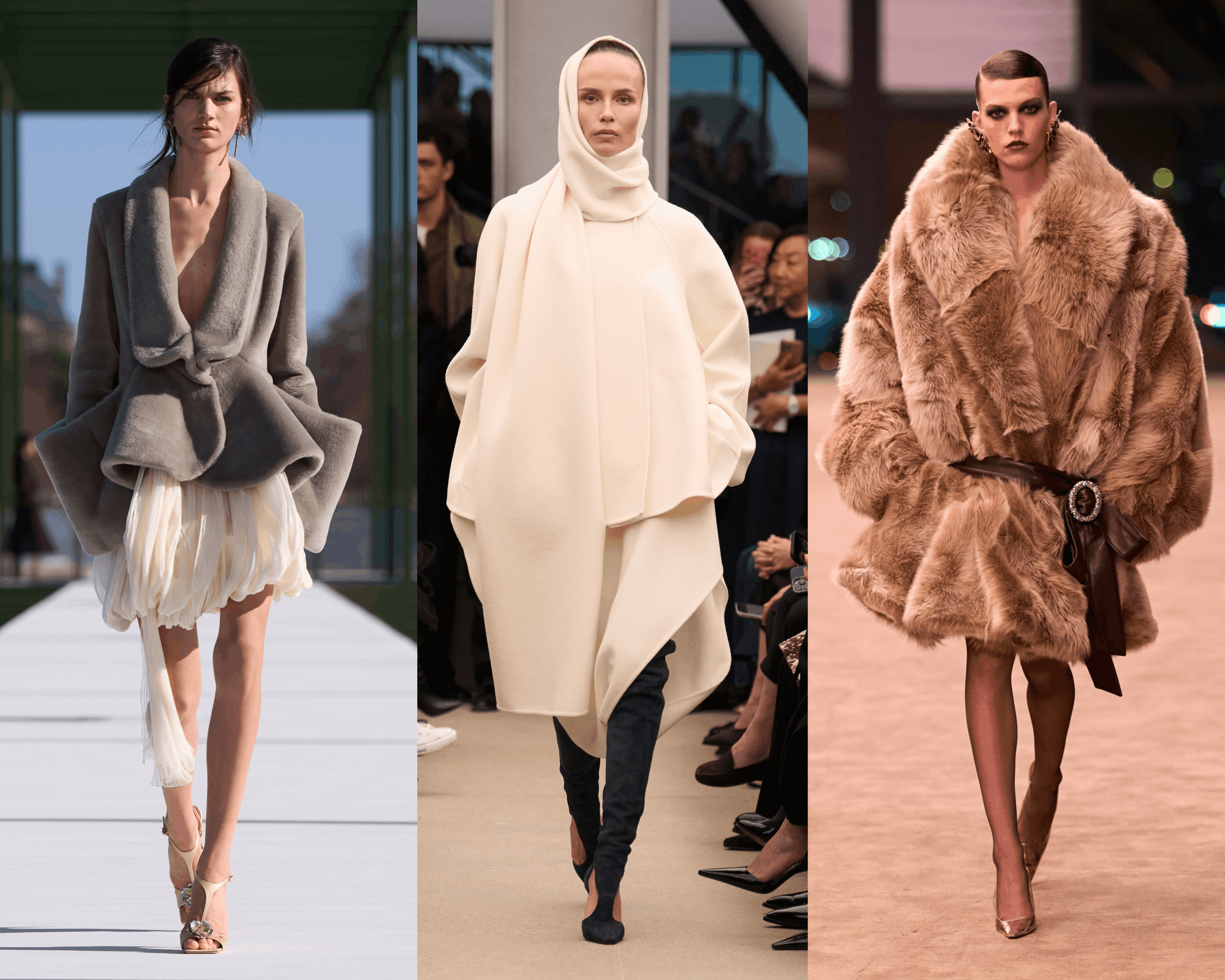
Paris Fashion Week is finally upon us for the Autumn Winter 2026 season. It’s the big one of the big four fashion capitals, and after an already incredible season across New York, London, and Milan, no doubt we are set to end on a high.
Attention will be focused on the sophomore collections of Jonathan Anderson at Dior, Matthieu Blazy at Chanel, Pierpaolo Piccioli’s Balenciaga, and Miguel Castro Freitas at Mugler, as well as Pieter Mulier’s final show at Alaïa. Other highlights will include Saint Laurent, Louis Vuitton, Courrèges, Chloé, Tom Ford, McQueen, Givenchy, Victoria Beckham, and Stella McCartney.
Read on for all of the highlights of the Paris Fashion Week Autumn/Winter 2026 season.
Louis Vuitton


Images Courtesy of Louis Vuitton
For Fall 2026, Nicolas Ghesquière paid homage to the greatest fashion designer: nature. Mountains, forests, and plains all served as inspiration for the latest Louis Vuitton collection – clothes that have evolved in response to our climate and surroundings. Floral and fauna motifs are imprinted on garments, and animal patterns are woven into canvas and denim. Three-dimensional prints approximate natural materials – buttons resemble minerals, heels resemble antlers, and leather is treated to resemble wood grain. Silhouettes are extreme with sharply defined shapes and elongated shoulders resembling mountains. As for accessories, the Noé bag returns to its original 1932 proportions and colour, while other bags are designed for exploration and wanderlust.
Hermès


Images Courtesy of Hermès
The Hermès Fall 2026 collection was presented amongst a mossy woodland at twilight. This was reflected in the colour palette as the show opened with sunset colours including mustard yellow which stood out amongst the collection. All before transforming into moonlit tones of navy, oxblood, and grey. Leather coats were softened by sheepskin collars while double-faced ribbed knits hinted at colour emerging from darkness. A biker-inspired asymmetric dress in glossy leather is styled with a blue shirt and forest green houndstooth coat is layered over an oversized trucker sweater and jodhpurs. Hermès bags will forever be a highlight, but this season, Kellys, Picotins, and Hobo bags acted as statement pieces against the darker tones of the collection.
Givenchy


Images Courtesy of Givenchy
Whether at McQueen or Givenchy, Sarah Burton’s collections are always a highlight of Paris Fashion Week. Known for delicate femininity and structured tailoring, Sarah Burton knows how to design clothes that women actually want to wear. And her latest offering for Givenchy Fall-Winter 2026 was no exception. According to the show notes, this collection focuses on her “intuitive portrayal of the strengths of women today.” This was shown through contrasts – soft versus structured, floral dresses that have been shredded, and a mix of feminine and masculine elements. There were double-breasted suits and belted trousers, drapey blouses and lace dresses adorned with bows. The colour palette was mainly based on black and grey, but with pops of colour and animal print. Head dresses designed by British milliner Stephen Jones were inspired by Northern European Old Masters paintings and framed the face with precision.
Zimmermann


Images Courtesy of Zimmermann
For Fall 2026, Zimmermann channels the spirit of confidence, independence, joy, and grit that is embodied by trailblazing Australian women. Feminine silhouettes soften traditional menswear references, “I thought of the collection as two parts that form the same whole. The first is all about utility – jumpsuits, structured drill fabric, and nods to sports uniforms – an exchange of feminine and masculine codes. It then shifts into lingerie-inspired pieces and more fluid looks,” explains Creative Director Nicky Zimmermann. Much of this season’s language is expressed through its layering, enhanced with textures of shearling, velvet, and silk. Underpinnings and silk shirts with exaggerated sleeves layer multiple looks, styled beneath blouson-style denim jumpsuits and sculptural knitwear. Silhouettes are designed to come alive in motion. Wrap dresses sway over wide-legged denim, and leather bomber jackets, styled with ruffled silk skirts, bounce with every step. Art Deco influences emerge in prints and silhouettes, while accessories are inspired by the textures of the 1920s, including embroidered velvet slipper-style mules and matching evening pouches.
Chloé


Images Courtesy of Chloé
The Chloé Winter 2026 collection reflects humanity, empathy, devotion, and how clothing not only holds emotion, but carries memories. Traditional costume and folkloric craft serve as the main inspirations for Chemena Kamali’s latest Chloé offering, particularly how much effort and time is put into making them and how this is a craft about community and togetherness. Chemena continues her modern take on bohemia and nods to folklore, which is seen through Prairie blouses, knitted cardigans, tartan skirts, and ditsy florals. Embroidery was a key detail throughout the collection, an ode to the devotion and effort needed to create garments with such beauty. Irregularities are welcomed as they only serve to reveal human care that no machine can ever replicate.
Acne Studios


Images Courtesy of Acne Studios
Acne Studios is now in its 30th year, and with that comes a reflection on its legacy. This collection for FW26 taps into the brand’s preppy and polished codes as past eras resurface in new ways. There’s the signature leather biker or aviator jackets, in cropped and fitted iterations. Jeans are slim and tapered, and the classic 1996 cut is revived while tailored jackets are sharp and slung across the body. Traditional patterns are destabilised. Prince of Wales checks are shifted in scale, placement, and colour – from dusty to darker tones and Hortensia motifs in satin resemble tapestry. Skirts and dresses feature larger-than-life faces from Paul Kooiker’s portrait series of art school students – a reminder that Acne Studios is anchored in the idea of creative collection. As for shoes, pointy toes define pumps and suede and leather boots.
Alaïa


Images Courtesy of Alaïa
Pieter Mulier dedicated his final collection at Maison Alaïa to his team, describing it as an “expression of all we have learned and felt across the past five years.” This was Alaïa stripped back and reduced to its very essence. Minimal, pure, essential. Materials were both humble and precious: loden, viscose, cotton velvet, latex, and raw-cut wool. And there were no accessories that acted as a distraction, just clothes designed to celebrate women. Homage was paid to totems of Alaïa – chiffon and jersey dresses inlaid with crocodile, as well as the timeless Alaïa proportions that have been reconsidered for today.
Isabel Marant


Images Courtesy of Isabel Marant
A masculine-feminine tension runs through the Isabel Marant Winter 2026 collection. With camionneur knits, sailor cable knit sweaters, and aviator outerwear that counteract the sheer transparency of tulle dresses, embroidered bustiers, and plunging leather boots. Thigh-high socks disappear into ankle boots, turning from day into night. While silver lurex shirts catch the light beneath tailored jackets, and long evening flou dresses are styled with bomber jackets. Silk robes and lace camisoles provide lingerie undertones that are juxtaposed by the rest of the collection, which is grounded in leather, vinyl, and patchwork shearling. The colour palette consists of black as the anchor with pops of red and blue for vibrancy. Snake print adorns silk and reappears in jewellery.
Schiaparelli


Images Courtesy of Schiaparelli
Arriving three weeks before the opening of ‘Schiaparelli: Fashion Becomes Art’ at the V&A, Daniel Roseberry unveiled his latest collection for the Maison, titled ‘ The Sphynx.’ The exhibition will provide a comprehensive retrospective of Elsa Schiaparelli’s life and work, and through this collection, Roseberry reflects on the founder’s legacy. For Elsa, a dress was never just a dress; it was a dimension to the female psyche. She made clothes that made women feel more alive with the dream of who they are – a concept very much evident in the Schiaparelli brand today. In the show notes, Roseberry reflects on the keyhole motif – possibly the most famous iconography of the brand. For the designer, this is more than just a pleasing shape; it is a reminder that every woman is an enigma, and it is fashion that allows her to externalise the mystery of who she is. Throughout this collection, the keyhole motif is reimagined in hand-hammered 24k gold-plated plaques, which act as a nod to Giacometti, who made some of Elsa’s original buttons, as well as on earrings and shoes.
The rest of the collection was, as always, brilliant. Each piece held an apparent contradiction. ‘Impossible knitwear’, as dubbed by Roseberry, is crafted from traditional Aran cable knits that are juxtaposed with panels of sheer tulle – creating the illusion of something heavy floating on the body. Or liquid plisse silk-blend fabrics that are topped with clear lamination and made into spiral cut gowns and separates. There is no boning, no hard lines, and yet the pieces have structure. Leather-effect sheaths are actually printed silk wool, and then there are dresses that combine stretch-jersey, second-skin fabrics with airy skirts trimmed with paillettes.
Schiaparelli has always been radical. But what Roseberry continues to prove is that it is never to the point of alienating women – and that is the ultimate legacy that Elsa built.
Carven


Images Courtesy of Carven
Mark Thomas’ latest collection for Carven FW26 explores the tension between uniform and intimacy, drawing from the maison’s codes of dress, moving between structure and seduction. Beginning with uniform tailoring that is precise and authoritative. Outerwear is cut with defined shoulders and structured silhouettes, yet softened through referenced to French interiors using draping, fringe, tapis, and blankets. 1950s couture influences are also seen throughout the collection through curved shoulder seams to create a spherical shape, as well as controlled waists and a reverence for craftsmanship. Classics from last season have evolved through abstract petal shapes, deconstructing volumes and folds rather than literal orchid interpretations, becoming a symbol of restrained sensuality. The result is a wardrobe filled with controlled yet emotional clothing designed for women who move confidently.
Courrèges


Images Courtesy of Courrèges
For Courrèges FW26, Creative Director Nicolas Di Felice has developed a wardrobe proposal to wear from morning to night. The collection opens with white satin dresses and skirts that wrap around the body like sheets and were inspired by the house’s archives from 1960 to 1980. These looks then give way to daytime coats with multiple snaps, trapezoidal cuts, vinyl ensembles, zippers, and tailoring details from the house’s codes. Urban references such as subway tickets are embroidered onto organza and denim is finished with a tar effect. While evening wear is adorned with light-reflecting glass beds. This season, Courrèges also introduces a new bag, the “Shadow”, featuring a minimalist shape in jersey, synthetic leather, and caviar weave. For the finale, each model reappeared wearing their first look but entirely reworked I white – a tribute to the Courrèges code which reflects the light and embodies the brands minimalism.
Saint Laurent


Images Courtesy of Saint Laurent
The Saint Laurent FW26 show opened with what Saint Laurent does best: power suits. Oversized black tailoring complete with large lapels and shoulder pads – honouring 60 years of ‘Le Smoking’ jacket designed by Yves Saint Laurent in 1966. Sheer lace dresses followed in earth tones of red, orange, and brown, which were paired with huge fur coats, oversized belts, and chunky jewellery. Dropped-waist fur coats were a highlight of the collection, as were latex trench coats.
Dior


Images Courtesy of DIOR
For his second collection for women’s ready-to-wear at Dior, Creative Director Jonathan Anderson designed a collection worthy of being seen. The Jardin des Tuileries has long been the setting of Dior’s runway shows, but instead of the usual white tent, this season’s collection was presented in a purpose-built greenhouse, surrounded by water lilies and the classic green park benches that are dotted around the garden. The setting was reminiscent of Claude Monet’s impressionist paintings, as well as the historic Parisian tradition of promenading. “People used to dress up to go somewhere,” says Anderson in a video that played before the show. “ When the Tuileries first opened to the public in 1667, visitors were required to wear habit décent – clothing appropriate for their social rank. Today, we choose clothes based on how we feel, not to signal social status.
As well as to shape the setting, the collection stayed true to house codes with florals being a key theme throughout – an homage to Christian Diors adoration for gardens. The first three looks featured puff miniskirts with a long train. Each one with a silhouette that evoked the structure of a flower in constant movement. While 3D lily pads and floral embellishments were decorated on heeled sandals. Denim jeans were adorned with botanical-inspired crystal embroidery, and the iconic Bar Jacket was reimagined in cropped and double-breasted iterations.
Jonathan Anderson has faced concern about whether his responsibility for eighteen collections a year is too much for one designer. Though if this collection is anything to go by, it may just be a walk in the park for him.